How to Choose a Listing Agent in Westminster, MD: 7 Questions to Ask Before You Hire
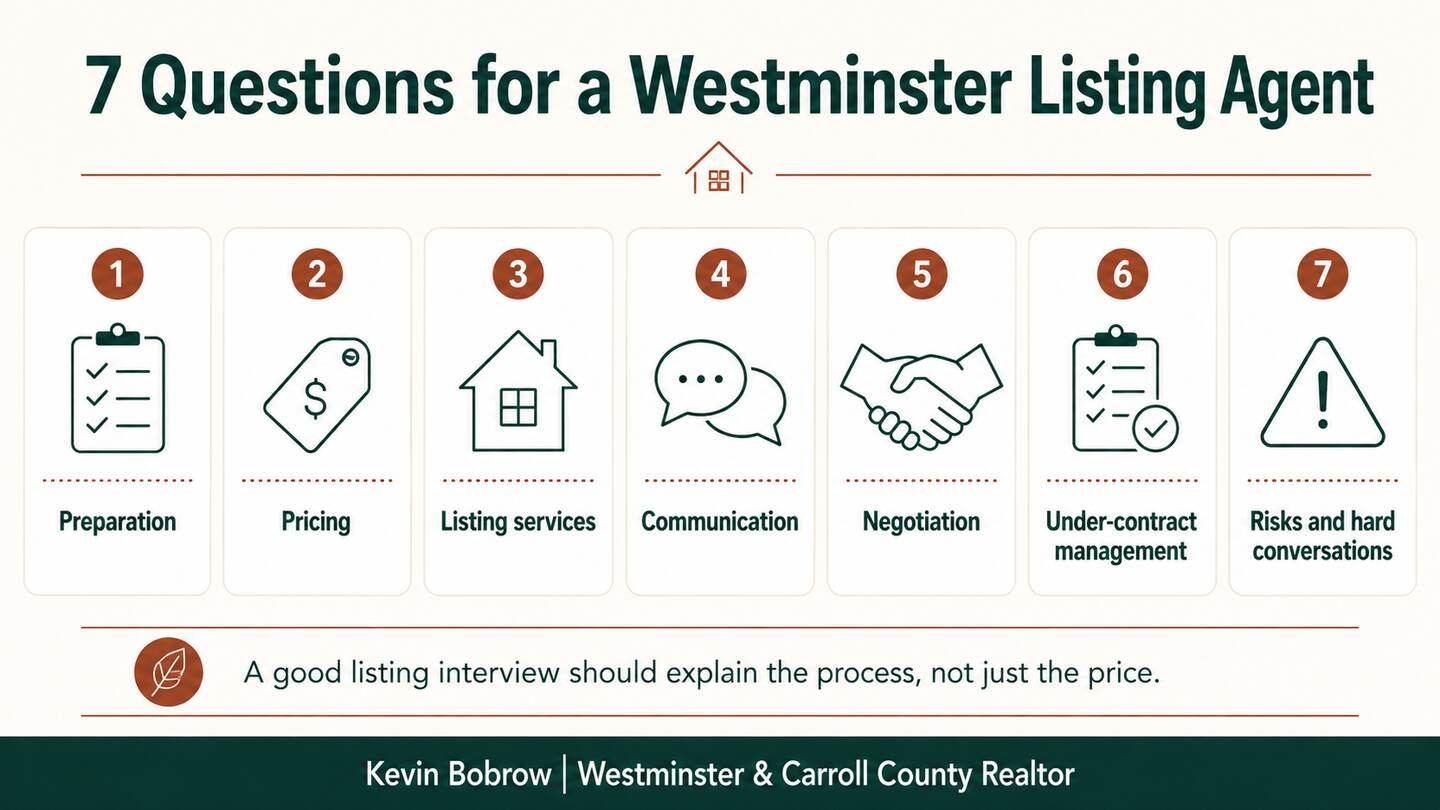
Choosing a listing agent is not just a decision about commission or who gives you the highest suggested sale price. The better question is whether the agent can explain how they will prepare, price, market, negotiate, and manage your sale from the first walkthrough through closing.
Kevin Bobrow recommends asking direct questions before you hire anyone. A good conversation should leave you with a clear understanding of the agent’s process, how they communicate, and how they will make decisions when the transaction becomes complicated.

1. How Will You Help Me Prepare My Home Before It Goes on the Market?
Kevin believes preparation should be specific to the house, the seller’s budget, and the likely return on the work.
His baseline advice is what he calls the three Ds:
- Declutter
- Depersonalize
- Deep clean
Beyond those basics, he may recommend paint, flooring, repairs, staging, cleaning, or other preparation when he believes the work could improve how buyers respond to the property. He does not believe every seller needs to renovate before listing.
A useful listing-agent conversation should answer:
- What should be done before photos?
- Which projects are optional?
- Which issues could affect buyer perception or negotiations?
- Where is the seller likely to get meaningful value from spending money?
- What can reasonably be left alone?
The goal is not to create a perfect house. It is to make deliberate choices before the home is exposed to the market.
2. How Do You Decide What My Home Should Be Listed For?
Kevin describes pricing as an art rather than an exact science.
His process begins by seeing the home in person. He then compares the property with similar homes that have sold recently nearby and adjusts his analysis for meaningful differences in condition, lot, features, updates, layout, and other property-specific factors.
He generally gives sellers a range of value rather than pretending there is one mathematically perfect number. From there, he and the seller discuss where to list within that range based on the home, the competition, timing, and the seller’s goals.
This is an important distinction when interviewing agents. The question is not simply, “What number would you put on my house?” Ask the agent to explain the evidence and strategy behind the number.
If an agent gives you a price that sounds dramatically better than every other opinion you have received, ask what comparable sales support it and what the plan will be if buyers do not respond.
3. What Exactly Is Included in Your Listing Representation?
Kevin’s listing representation through his brokerage includes placing the home on the MLS, professional photography, floor plans, yard signage, open house activity when appropriate, and marketing efforts to sell the property.
Some additional preparation services, such as staging or cleaning, may be paid directly by the seller or may be structured differently depending on the agreed commission and listing plan.
Before signing with any listing agent, ask for a clear explanation of what is and is not included. This helps you compare the actual service rather than comparing commission percentages without context.
Useful questions include:
- Who coordinates photography?
- Are floor plans included?
- How will the property be marketed?
- Will there be an open house strategy?
- How will showing activity and buyer feedback be communicated?
- Are staging, cleaning, repairs, or other preparation services included or separate?
4. How Often Will You Communicate With Me?
Communication is one of the areas Kevin considers central to his work.
Sellers should know who will contact them, how quickly questions are usually answered, and what communication will look like during the different stages of the sale.
That includes more than sending showing notifications. A seller may need updates about buyer interest, feedback, pricing decisions, inspections, appraisal, financing, title work, deadlines, and issues that arise after the contract is signed.
Ask the agent what happens when the news is not good. Strong communication matters most when a deadline changes, an inspection creates a problem, financing becomes uncertain, or the transaction needs active problem-solving.
5. How Do You Handle Negotiation and Conflict?
Kevin describes his negotiation style as collaborative negotiation.
He does not believe effective real estate negotiation requires creating unnecessary conflict with the agent on the other side. His approach is to advocate firmly for his client while keeping the working relationship productive enough to solve problems and move the transaction forward.
That does not mean agreeing to every request. It means understanding the client’s priorities, deciding where to push, communicating clearly, and recognizing that both sides may still need to work together after the contract is signed.
When interviewing an agent, ask how they handle:
- Multiple offers
- Inspection negotiations
- Appraisal issues
- Delayed financing
- Requests for seller concessions
- Conflict with the other agent
Listen for an answer that is more thoughtful than “I fight for my clients.” You want to understand how the agent actually makes decisions.
6. What Happens After I Accept an Offer?
Getting the home under contract is not the end of the listing agent’s job.
The period between contract acceptance and closing can involve inspections, repair negotiations, appraisal, financing, title work, settlement coordination, and multiple deadlines. Problems that arise during this stage can put a transaction at risk if they are not handled quickly.
Kevin’s emphasis on communication and detail management is especially relevant here. Sellers should ask how the agent tracks deadlines, communicates with the buyer’s side, and responds when another party is causing a delay.
One of Kevin’s recent transactions involved a buyer-side lending delay that threatened the closing timeline. He pushed for answers from the lender, escalated communication when necessary, stayed in contact with the other agent, and kept his sellers informed while the issue was being worked through.
The lesson is not that every difficult transaction can be saved. It is that sellers should understand what their agent will actually do when a transaction stops going according to plan.
7. What Would Make You Tell Me Something I Do Not Want to Hear?
Kevin believes a listing agent should be willing to tell a seller the truth from the beginning.
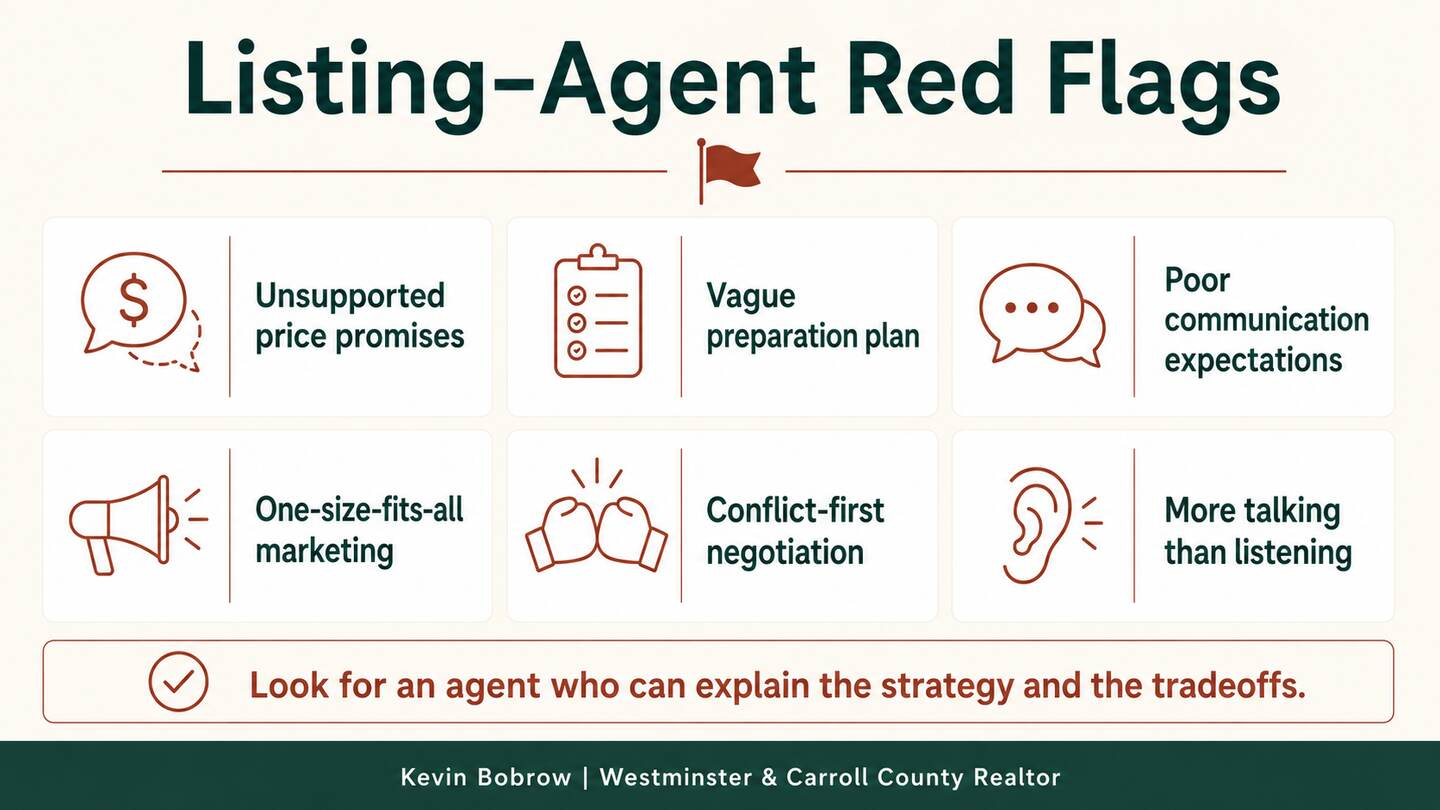
A red flag for him is an agent who makes the sale sound unrealistically easy, promises a price that is not supported by the market, or seems more focused on winning the listing appointment than explaining the risks and tradeoffs.
Another warning sign is an agent who talks more about getting their own way than understanding what the seller wants.
A good listing agent should be able to say:
- This improvement may not be worth the money.
- This price may reduce buyer interest.
- This offer may be stronger than it first appears.
- This contract term deserves more attention.
- This issue could delay or threaten closing.
You are hiring an adviser, not someone whose job is to agree with every assumption you bring into the process.
Commission Matters, but It Should Not Be the Only Question
Kevin says commission is one of the most common questions sellers ask, and it is a reasonable question.
The more useful conversation is what the fee covers and what the agent’s work is designed to accomplish. Preparation guidance, pricing strategy, professional presentation, marketing, negotiation, communication, and transaction management all affect the seller’s experience and can affect the outcome.
Ask every agent for a clear explanation of the compensation structure and listing services before you sign an agreement. Then compare the complete plan rather than choosing only from the percentage on the page.
What a Strong Westminster Listing Agent Should Be Able to Explain
By the end of an interview, you should understand:
- How the agent evaluates your home before listing.
- Which preparation they recommend and why.
- How they select comparable sales and build a pricing strategy.
- What marketing and listing services are included.
- How and when they will communicate with you.
- How they approach negotiation and conflict.
- How they manage the transaction after an offer is accepted.
- What risks or weaknesses they see in your particular sale.
If those answers are vague, the listing presentation may be polished without giving you much information about what working with the agent will actually be like.
Frequently Asked Questions
Ask how they will prepare and price the home, what their listing representation includes, how they communicate, how they negotiate, and how they manage inspections, appraisal, financing, and closing after an offer is accepted.
Not automatically. Ask each agent to explain the comparable sales, property differences, current competition, and strategy supporting the number. A higher suggested price is only useful if the market evidence supports it.
Kevin’s listing representation through his brokerage includes MLS listing, professional photography, floor plans, yard signage, open house activity when appropriate, and marketing efforts. Additional preparation services such as staging or cleaning may be handled separately depending on the listing plan.
Kevin begins by seeing the home in person, then reviews relevant recent comparable sales and adjusts his analysis for meaningful differences. He typically presents a range of value and then discusses the strategy behind the eventual list price.
It is Kevin’s term for advocating firmly for his client while maintaining productive communication with the agent and parties on the other side. The goal is to protect the client’s interests without creating conflict that makes a difficult transaction harder to solve.
Kevin would be cautious about an agent who overpromises on price, makes the sale sound unrealistically easy, does not explain their process, appears unwilling to collaborate, or seems more interested in pushing their own preferences than listening to the client’s goals.
Talk With Kevin About Selling in Westminster
If you are considering selling a home in Westminster or elsewhere in Carroll County, contact Kevin Bobrow to schedule a conversation about preparation, pricing, and what the listing process would look like for your property.
Sources
